
See more clearly
Examine what is present before deciding what it means.
A book for leaders who want to understand why considerable attention and thoughtful effort can still produce familiar results.
Join the book list →Recurring problems provide a visible signal. InCongruent follows the conditions, assumptions, decisions, and systems beneath that recurrence to examine how capable organizations can continue producing familiar results.
Follow the book as it develops →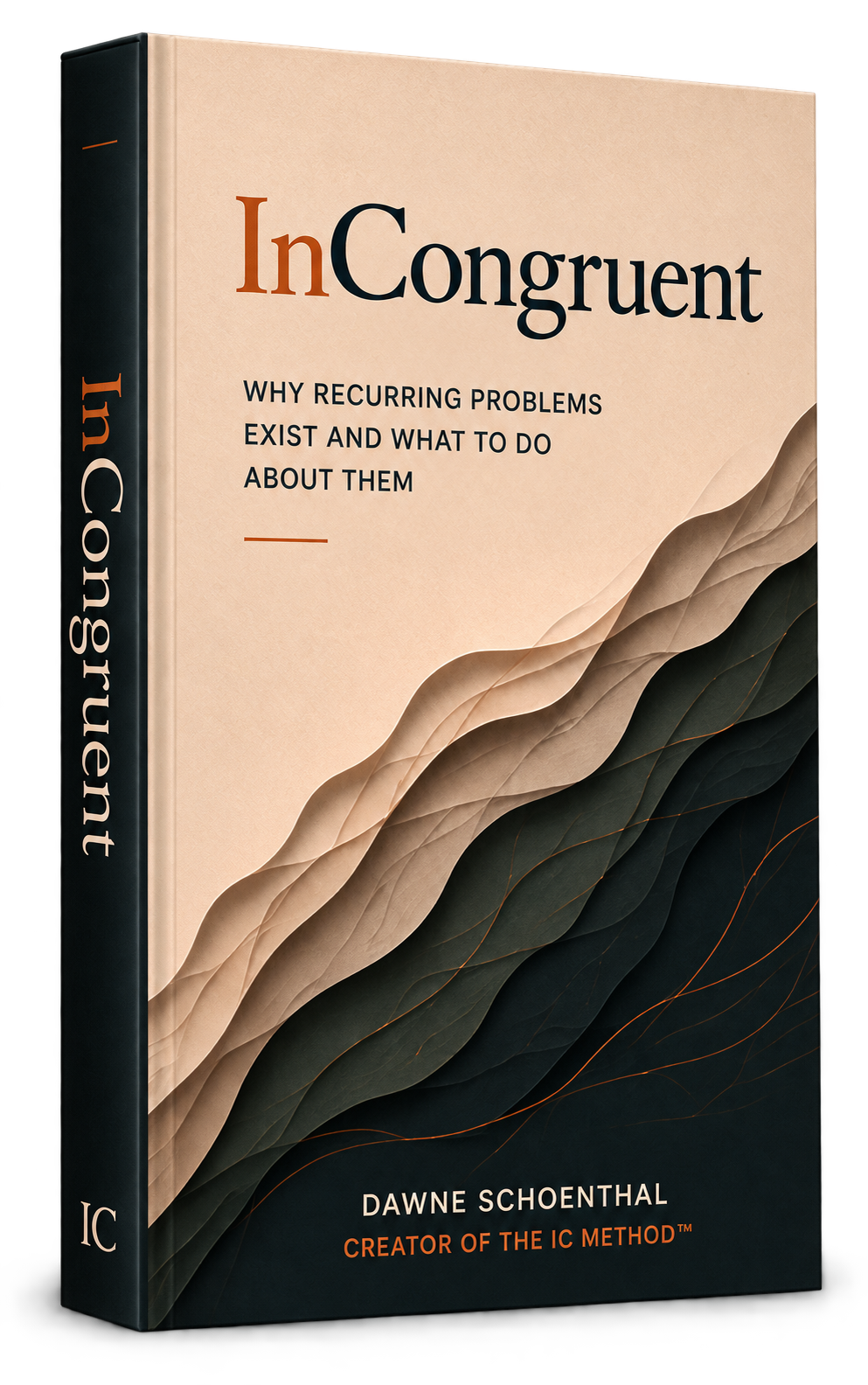
Examine what is present before deciding what it means.
Bring intention, conditions, choices, and evidence into relation.
Move from familiar reaction toward disciplined inquiry.
InCongruent follows recurrence into the larger system around it: how intentions meet conditions, how decisions accumulate, how familiar patterns persist, and how disciplined inquiry creates a clearer basis for what follows.
Explore the IC Method™ →Why capable organizations can invest intelligently and still fall short of what they intended.
How expectations, conditions, decisions, and systems can keep producing familiar results.
A five-question discipline for creating a clearer basis for what comes next.
How organizations can connect intention to an accessible action and meaningful evidence.
Recurring problems consume more than money. They draw on attention, capacity, credibility, and people’s willingness to participate in change. The book begins with recurrence, while the underlying discipline can travel into strategy, design, launches, and the decisions surrounding them.
“Greater clarity at the beginning creates a stronger basis for every decision that follows.”

I am writing InCongruent for leaders who recognize the cost of returning to the same work without a clearer understanding of what continues to shape it. The book brings together years of work where organizational intent meets operational reality.
FOUNDER, INCONGRUENCE LLC · CREATOR, THE IC METHOD™As InCongruent develops, Dawne is speaking with leaders, practitioners, and others who have seen recurring organizational problems up close. These conversations may inform the book through lived experience, anonymized anecdotes, case material, or questions worthy of deeper examination.
Your first message simply opens a conversation. Participation may take the form of an informal discussion or an interview, depending on relevance and comfort. Nothing will be quoted, attributed, or published without your knowledge and explicit permission.
Share an experience →Join the book list for manuscript updates, selected excerpts, publication news, and future release information.
Explore the method, bring the thinking to an audience, or start a conversation about your organization.